The case of Lord McAlpine vs the BBC, ITV and prominent Twitter Users was an interesting case because A reporter from a BBC news watch reported on some tweets that claimed Lord McAlpine was a pedophile. This of course could damage his reputation and give people the wrong perception of him, and all of this came about through the medium of social media. The claim stated that anyone who had above 500 followers and tweeted about the incident would receive a hefty fine while other who have less would donate to the BBC charity.
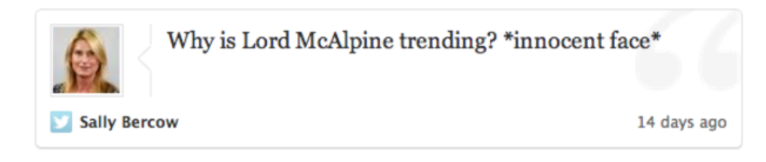
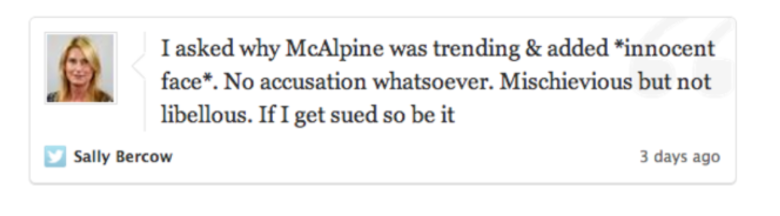
Monbiot and Davies who were two other involved in the case who sincerely apologized to lord McAlpine and got lesser punishments then Bercow who had 56000 followers on twitter at the time. In the judgement in the court between Bercow and McAlpine it was decided by both parties, Bercow pay for the damages she had done, since she was a credible reporter and has the ability to reach a large variety of different people, and change the public’s perception about the reported on person. Overall, I think this case directly relates to some of the points we have spoken about this semester.

independent.co.uk (Getty Images)
Such as privacy and credibility, it invades McAlpine’s privacy by someone exposing information about him that is not even true in this case. While also someone who is a credible source gives people all the reason to believe what is said. I am a big believer that defamation is a serious problem that we face in our society today, some have the ability to impact other lives through social media just by mentioning their name, so when you have a person that people listen to report something that is not true, in this case on a matter such as pedophiles, there can really be no good to come from it. It can be one thing for people to make such claims about a person with no evidence through twitter, but to have it on a news channel such as BBC and ITV affects the credibility of the news sources.
Written by Leon Maric

 Keep Com