The tangible and exclusive legal right that applies ownership to the creator and protects the ‘expressions’ of some ideas, but not the idea itself. It lasts for 70 + years after author’s death. The author of the work has the ‘moral right’ to be identified as the author of the work and object to the distortion of the work. Economic rights associated with copyright vest in the owner of the copyright. The owner could be different from the author. For instance, in the case of a book, the owner of the copyright could be the publisher, and in the case of the movie, it could be the producer. In some instances, copyright may be jointly owned as well.
Patents
Patents are known as the set of exclusive rights granted by a sovereign state to an inventor. A patent lasts 20 years for a utility patent, and 14 years for a design patent, beginning from the day that the patent application was filed. Patents protect inventions,which could either be products or processes. The requirements for an invention to be patented is that it must be useful, non-obvious, and new.
Trademarks are defined as a recognizable symbol, sign, expression, design , etc. which is used to identify and differentiate one product or service from another. Some common examples of trademarks that you probably encounter on the daily are the McDonald’s Golden “M” symbol, or the famous Nike Swoosh. An interesting fact about a trademark is that it never expires; it lasts forever! Also, there is no need to apply for a trademark because the minute the owner puts it in a tangible format, it is already protected by copyright. Even the Kardashian-Jenner sisters have filed documents to trademark the names of their children on a number of products including clothing lines, toys, and skincare products. Kylie Jenner and Travis Scott filed a trademark for “Stormiworld”.
Kardashians File Trademarks for North, Saint, True, Stormi and Chicago https://t.co/crxhBrM8bB
Trade secrets are the information that act as a “secret device” for manufacturing a company’s products. These secrets could act as a formula, program, method, process, pattern, etc. An example could be a secret formula to Coca Cola. Unlike the other forms of protection such as copyright, trademark or patent this does not have to be in a tangible medium this can simply be an idea that one company develops and discloses the information from the public, that is where the term secret comes into play.
This week in Communications, we examined the case of Justine Sacco concerning her controversial Tweets. These Tweets were seen as unnecessary and offensive to certain groups of people, yet she claims it was all a joke and not meant to be taken seriously. However; this joke ended up being the cause of the complete downfall of both her professional and personal life. Cases like Sacco’s bring up the very argued question- Should we, as internet users, have the right to be forgotten? Should our mistakes and embarrassments be able to be permanently deleted from the internet? We interviewed each of our four group members concerning the subject, and here are their responses:
Do you feel that Justine Sacco deserved to lose her job for her Tweets?
Alvin– I think at 30 years of age and a person in such a high position as Justine Sacco, I think you should be very careful about what you says and do especially on the internet. I don’t know what was her intention, and of course, intention is not the same as effect. Whatever Sacco meant, her tweet was gross and offensive and I think she deserved to lose her job because her job had a lot to do with public relationship.
Ali– I feel that tweets similar to Sacco’s are completely inappropriate and are not professional. Everyone should be aware that once they post something on the internet, it is there forever. Though losing her job seems severe, I believe that it was a great awakening for her and others. As simple as it sounds, she should have known better and considered the consequences of her tweets.
Leon– I feel that in general someone should not lose their job for something they may have said prior in their life, but in the case of Justine, her comments affect the way people may look at the company, therefore having her on their team may send the wrong image of what they want their brand to be about. Therefore, I think it is up to the company as what they want to do with employees in cases like this and have no problem which way they choose to go with their decision. But in the case of Justine I feel like she got what she deserved.
Meghan- I feel that although this punishment seems a bit extreme, her employer did not really have the option of keeping her, as the entire internet world had seen her Tweets by this time and caused an uproar. If they didn’t fire her, they knew that they would have faced serious backlash from the general public and ruined their reputation as a company.
Do you believe that what you post on the internet should be permanent?
Alvin- I am kind of in the middle with this, I think that kids under at least 15 years of age should be allowed to permanently delete their post from the internet, but at the same time I think that will make kids even more reckless with the internet, I think we as humans are term to do better with consequence, therefore I’m going to say No!!
Ali- Personally, I believe it depends on the content. If it an embarrassing photo or video, yes. But if it is a post where someone is degrading/insulting others and they are an adult who should know better, why would they worry about deleting it if they made the decision post it?
Leon- I think the idea of permanently deleting something from the internet goes against our idea of freedom of speech. So deleting things from the internet since we live in such a digital age is kind of like deleting history. What if that information posted is important to future generations and can provide knowledge? Then there are some cases such as bullying where I think that posts should be taken down but because it violates certain guidelines set out by the creators of these sites, the case of bullying is one of the only reasons why I could see something being deleted from the internet.
Meghan- I believe that if the content posted was by somebody else with the intention of making you look bad or embarrassing, then yes, it should be able to be deleted. However; if you personally post something, whether or not it may offend someone or unintentionally make yourself look bad, you should be held accountable for that content and face whatever consequences come with it.
What do you think the positives are of the right to be forgotten on the internet?
Alvin– The right to be forgotten can give people who had made mistakes on the internet a change at life. Especially in a country like the United States where people have the right to freedom of speech, people could say many things that they might not have the same view in the future, the right to be forgotten can forgive and forget the passed and leave it in the past.
Ali- Though there are certain cases that hard to justify, If someone evolves and changes perspectives, I believe that we are able to forgive and forget their past mistakes as they now know and do better. This could help society as a whole in making others aware that it is possible to change from a negative to a positive person if we enable ourselves to forget about their past and move forward.
Leon- People can forget their past mistakes without them having to be constantly reminded of them. Like mentioned in the TED talk earlier this week I think that forgetting allows for forgiveness, therefore by forgetting certain things it will allow grudges to pass and new healthy relationships be built.
Meghan- An important advantage of being able to be forgotten on the internet is that if someone was cyberbullied, they would not have to be constantly reminded of those hurtful comments or relive them every time they logged on to the internet.
What do you think the negatives are of the right to be forgotten on the internet?
Alvin- The lack of transparency surrounding important information about a person and potencial retrain on media, journalist and other freedom of speech.
Ali- We could potentially fall into a trap as we are unaware of the truth behind someone. If you enforce this right to be forgotten, your denying the internet’s ability to have access to information. It’s a massive shift of a burden and is a cost. It clouds the enforcement of human rights.
Leon- The negatives about the idea of “right to be forgotten” is that it may provide a fake sense of news and information to people. If you are hiring someone for a job and they are able to delete a history that may be controversial, then in essence you are not hiring the person you think you are. Also, deleting certain things may be detrimental to society as a whole because then people may feel free to say or express whatever they want with the knowledge that it can be deleted whenever they choose, making their thought process at certain moments careless or naive.
Meghan- The biggest flaw in the right to be forgotten is that people would no longer have to be held accountable for their words, which may cause the various comment sections of social media to become nastier and crueler than they already seem to be. Especially for important public figures who hold positions of power in the world, it is important that the public can have access to their past before supporting them.
While we all had varied responses and ideas about the concept of “The Right to be Forgotten”, it is important to see that there are always two (or more!) sides to every story. Like most issues we have studied so far in our Ethics of Media course, there are no clear black or white decisions that can be determined; only a ton of controversial, imperfect gray area.
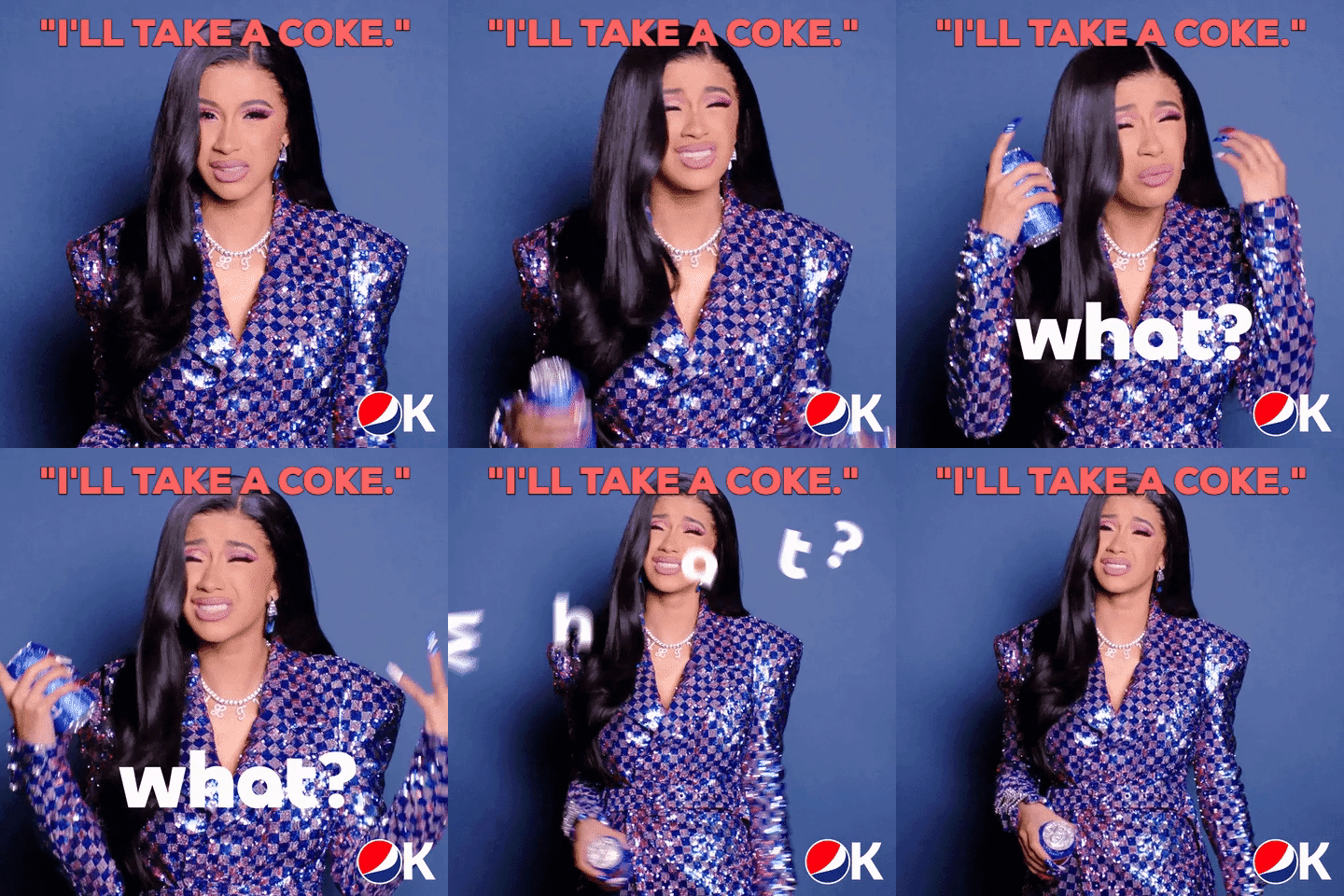
If I asked you “Coke or Pepsi?”, I’m probably not the first person to ask you this. While some don’t seem to care which one they drink, others prefer one over the other. But when it comes to seeing which one celebrities choose to drink, that might influence some people’s decision. In Pepsi’s Super Bowl commercial “More Than Ok”, Steve Carell answers the waiters question “Is Pepsi Okay?” since they sell Pepsi, not Coke. Being each others biggest rivals, this commercial clearly supports Pepsi in saying that it is “more than okay” than Coke. Due to Pepsi’s cast consisting of Steve Carell, Cardi B, and Lil Jon, consumers that are fans of these celebrities might choose Pepsi as well.
“Bud Light Corn Syrup Commercial”
The Bud Light Corn Syrup commercial, in this ad the king get a shipment of corn syrup. The commercial proceeds to call out Miller Lite and Coors Light for having corn syrup in their respective recipes. The implication, it would seem from outside the creative team that built the commercial, is that corn syrup is bad, therefore those beers are bad for using corn syrup. Who wants sugar in their beer? The suggestion is that, though it’s unsaid in the commercial, the criticism was that competitors use cheap products. It doesn’t deny any other implications but seems to set aside any accusations that it was misleading about the role of corn syrup in brewing. The question here is that should they be calling out their competitors out like that?
“The Elevator”
Hyundai’s commercial, “The Elevator”, that aired during the 2019 Super Bowl caused a bit of controversy within the vegan community. In this advertisement, guests are riding on an elevator that seems to be stopping at “bad” floors; each floor has a name, and each one seems to be just as bad as the next. For example, they stopped at floors called, “Root Canal”, “Jury Duty”, and “Middle Seat”. One of the “bad floors” they stopped at was called “Vegan Dinner Parties”, where they questioned “Is that even a thing?” paired with a man making a grossed-out facial expression. This came off as offensive that the company made a negative connotation out of the word “Vegan”. Some may think that the commercial meant no harm, but others took the commercial as controversial and unnecessary.
“NFL 100 Commercial”
This commercial is was presented during the Super Bowl this year, in order to celebrate 100 years in the league. It was rated as the #1 rated commercial from this years event. It included many legends of the game reacting to a ball falling on the floor. The football fell on the floor and all of the players go crazy over it. A controversial point comes up during then when in midst of all the chaos and tackling of one another the ball ends up in the hands of a woman. Instead of tackling her Richard Sherman who is a top cornerback in the NFL today asks her nicely for the ball. She refuses and says “come and get it”, the reason I find this controversial is because it is in a way diminishing the presence of women in sports. Since the NFL has never really included woman in the sport this female questions that by say come and get it.
When scrolling through Instagram you may see those random ads that have no correlation with your interest and just scroll over them. What you may not know is that your favorite celebrities are in a way advertising specific products and getting paid an absurd amount of money for including such a small product. For example, Selena Gomez posted a picture of her sipping out of a coke bottle through a straw and it received over 7 million likes… You may completely ignore the fact that she is advertising a certain brand/product and just like the photo because you are a fan of hers. The question about Transparency arises, many people are unaware of this brand advertising through social media outlets like Instagram and many people are now asking is it manipulating to the viewers of these hidden advertisements.
If every new celebrity can become their own media via social media platforms and make direct advertising income, a lot of new actors may even pay to appear on TV to attain quick celebrity status and start direct monetization.
Is this strategy of celebrity advertising through social media, specifically Instagram posts, considered fair to the public? This is a controversial topic of discussion, and opinions vary. Some may not mind that they are constantly influenced by the celebrities they know and love, however, some believe that they are being manipulated to be drawn to these products. This idea also relates to the idea of product placement in TV shows and films, as many argue that making a script revolved solely around a brand is messing with artistic integrity. However you may view it , both company AND celebrity greatly benefit from these brand deals.
So what other celebrities are getting paid for simply posting a picture with “#ad” in their caption? Per sponsored post, Kylie Jenner makes $1 million dollars. This makes her the highest paid social media influencer, according to the 2018 Rich List by Hopper HQ. Michael Heller, CEO of digital marketing firm Talent Sources, claims that social-media posts now make a 25% contribution towards the Kardashian’s wealth. But Jenner and her Kardashian sisters aren’t the only ones making money off of sponsored posts. Checkout the YouTube video below to see who else makes hundreds off of one post.
In our COM 201 class was watched the film The Internet’s Boy about American computer programmer and entrepreneur Aaron Swartz. The film is relative towards our course as we are learning about copyright, creative commons, rational justification, moral failures, etc. Also known as an Internet hacktivist, Swartz hacked JSTOR by downloading locked files into his hard drive that could only be accessed through payment. Why did this genius want to get his hands on to these files? Because they were millions of texts of scholarly journals and recycled law papers full of knowledge that could benefit the world as a whole. So, Aaron did not do this for himself, he was making an idealistic decision by putting himself at risk for others. The results seemed ridiculous as many thought that he should not have been given the attention similar to the criminal system, he was just trying to make a point.
Throughout the film, we are familiarized with the words copyright and creative commons. It is important, especially for us as bloggers, to give credit to those whose work we are using and to not make money off of it. Later, we come across issues regarding ethical decisions and moral failures. In Swartz case, as mentioned before, he made an ethical decision for the sake of others as the locked knowledge had great potential of benefitting the world. Moral failures are shown as the Massachusetts Institute of Technology (MIT) made a moral failure of taking the wrong stance and helping the government when they really could have made a better decision.
On our blog keep calm, we will talk about ethics and morals what each means and how certain situations in the world are affected by our ethics and morals. Specific situation, examples and readings will be referenced in our post in order to give readers the knowledge that we are obtaining in class. Important and key points that we discuss in class will be posted on our blog, the different types of ethics such as virtue ethics, duty ethics and etc. will be related to the world we live in. Overall, this sites main purpose is to inform people on what the creators of KeepCom feel should be shared to the public when it comes to ethics.




 Keep Com